
Stretford's unusually wide platform
From this video: Stretford’s unusually wide platform - Metrolink Insights
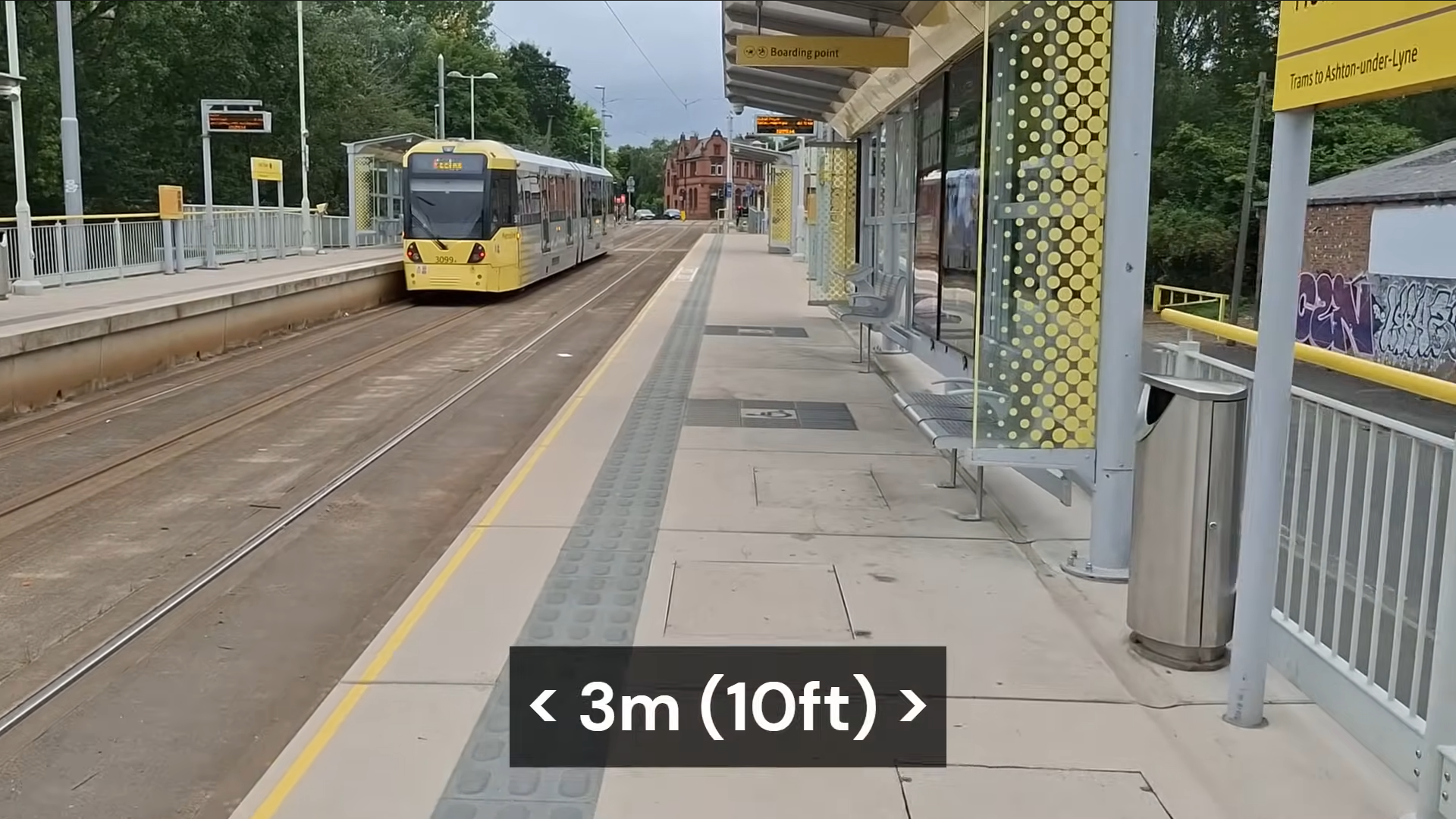
Holt Town tram stop on the East Manchester (Ashton) Line.
Most Metrolink stations across the network have platforms that are 3 metres wide (that seems to be the standard, unless they are island platforms of course).
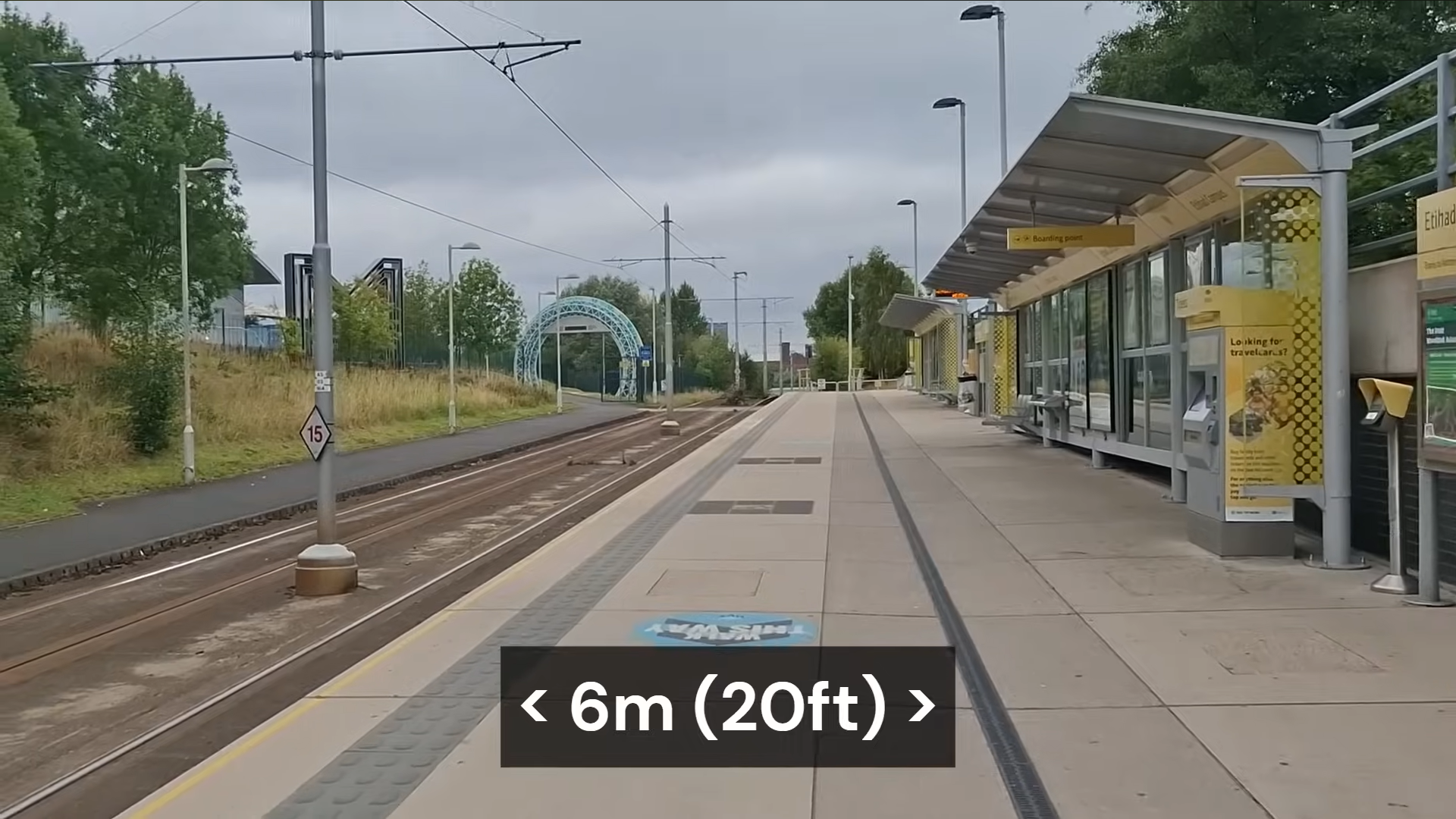
Etihad Campus tram stop, one stop further east on the line to Ashton, near to the Co-op Live arena.
Some stops that are expected to be busier during events or peak times have double-width platforms at about 6 metres, for example Wharfside or Etihad Campus, both near football stadiums.
Both platforms at Old Trafford tram stop on the Altrincham Line are wider than this, but the inbound one in particular (“inbound” meaning trams towards Manchester city centre) is 10 metres wide at some points along the platform, as it is right next to Old Trafford Cricket Ground and a short walk to Old Trafford Stadium (though Wharfside mentioned before is much closer to the stadium).
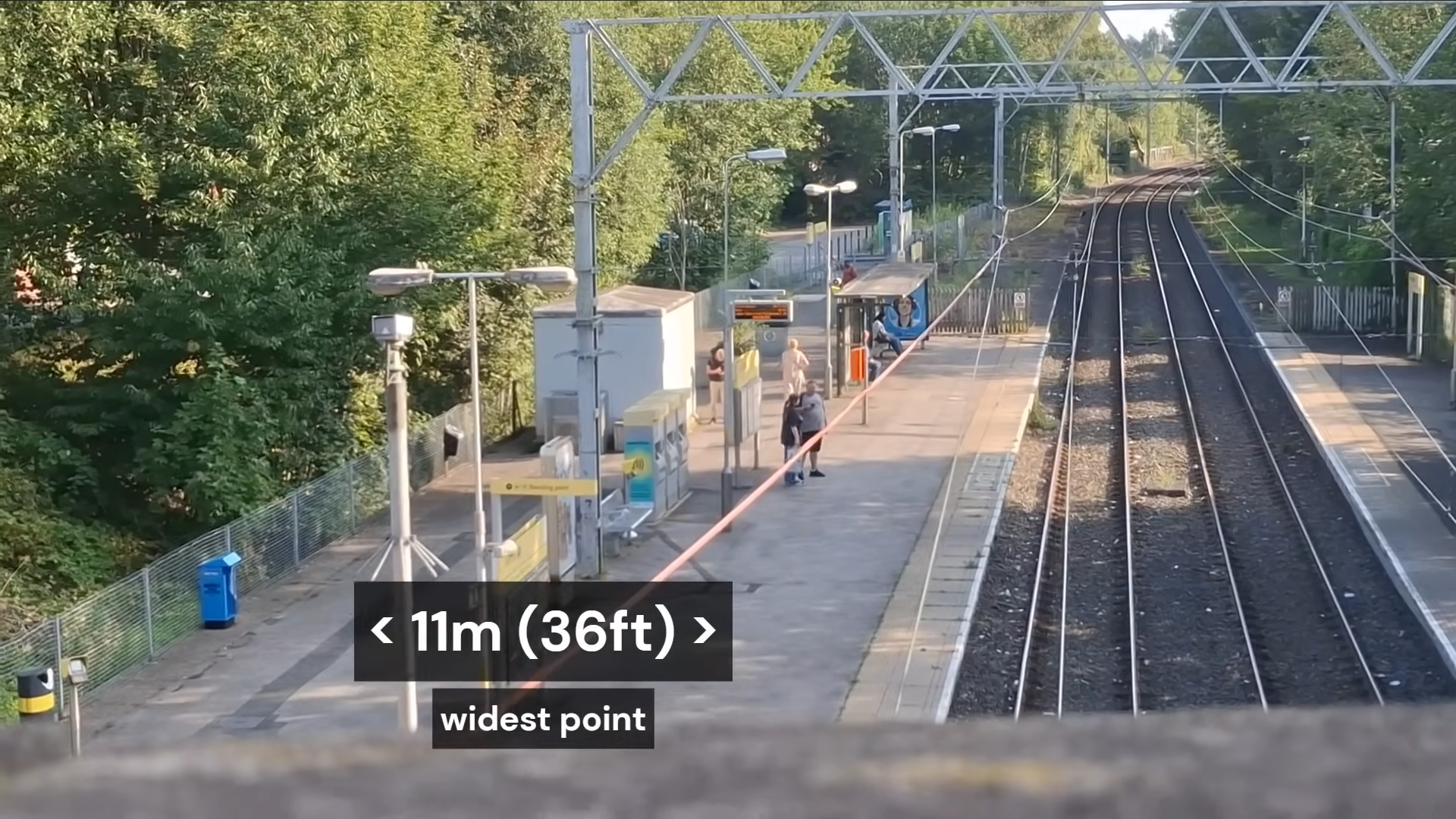
Stretford tram stop on the Altrincham Line, as viewed from the Edge Lane road bridge looking north.
Stretford’s inbound platform is 11 metres wide at the widest point, though it isn’t near to any major venue, popular place of interest (compared to other locations in Greater Manchester of course), or transport interchange.
For clarity, I’ll call the platform to the right of the above picture Platform 1 and the left one Platform 2.
This tram stop used to be a railway station, which opened in 1849 with two platforms, however two more tracks were added to the left of the picture above in 1904, when the line between Old Trafford rail station (now Trafford Bar tram stop) and Sale was widened to four tracks. The four-track section ended just north of the School Lane road bridge in Sale.
This new capacity may have required an entirely new platform structure (Platform 3) for Stretford to be built directly next to Platform 2, effectively doubling its width, however (and this is important to note), it is possible that Platform 2 at Stretford has been this way since it opened in 1849. There’s little evidence showing how exactly wide the platform was between 1849 and 1904, I’m just making an educated guess, seeing as that’s a logical reason why the platform space could have been made larger.
In 1963, the two extra tracks were removed and taken out of use, along with Platform 4 which was the westernmost platform, however the wide Platform 2/3 at Stretford was kept (again, it could have been built like this in the first place). Then of course the Metrolink arrived here on 15 June 1992.
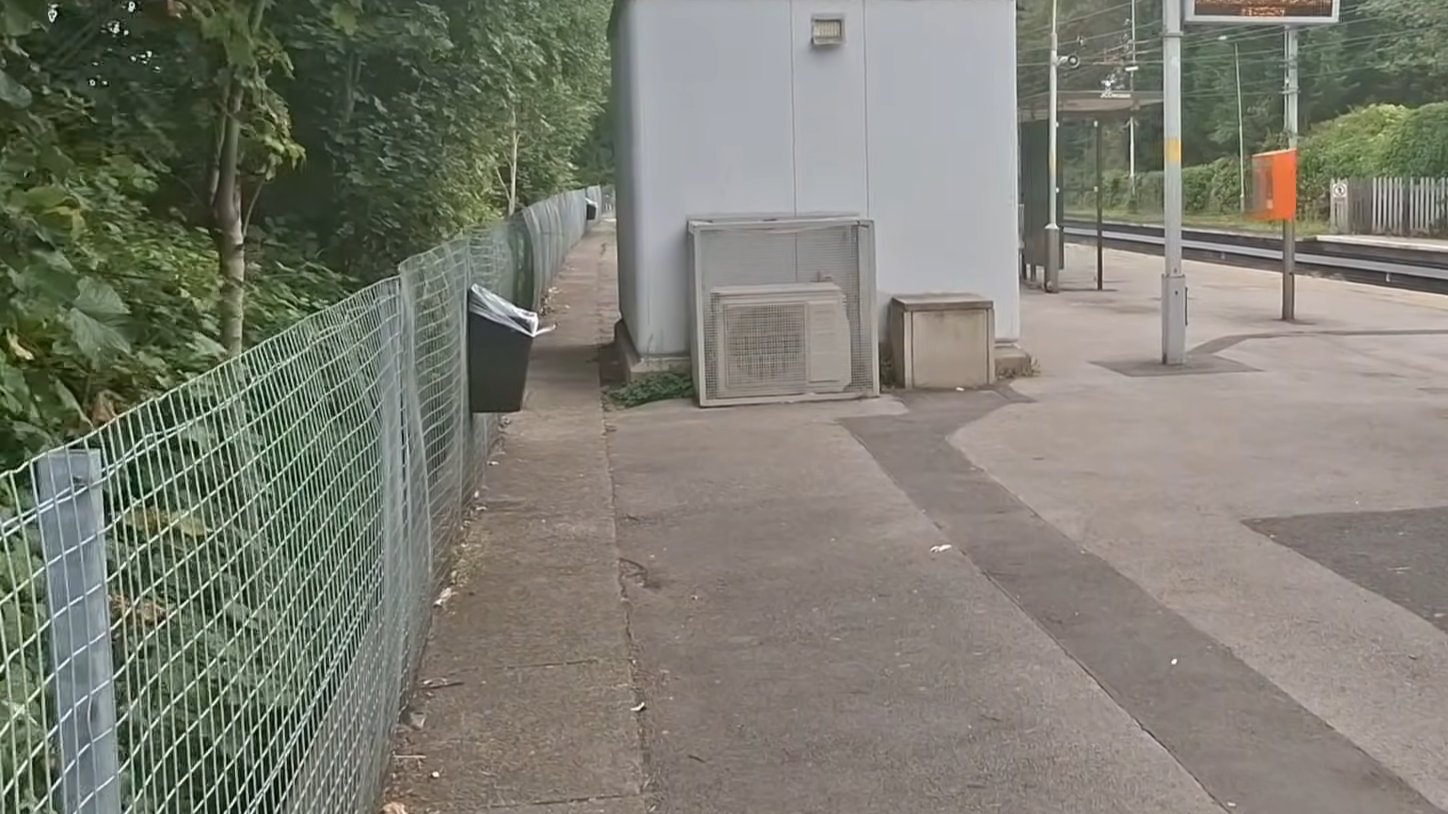
Stretford at platform level, showing the former platform edge (Platform 3) to the left, blocked off by a fence extended across the edge.
At the other end of the platform, you can still spot the tiles at the platform edge where the Platform 3 track would have been. The two present Metrolink tracks are to the right. That platform edge is blocked off, and a litter bin hangs from the fences in this picture.
As evidence of the extra two tracks operational between Old Trafford and Sale in 1904-1963, there are extra arches underneath some of the road bridges or just extra space underneath footbridges where the extra two tracks would have been.

An image of the arches underneath Great Stone Road where the tram line meets it, driver’s eye view.
There is an extra arch under the road bridge at Dane Road tram stop, and (shown here) there are also three arches under Great Stone Road, near Old Trafford tram stop, which indicates that as many as six tracks may have ran here at some point.
As more evidence, on bridges that the trams use (for example the bridge over Hawthorn Road, now a footpath, south of Stretford) there is obvious extra space for two more tracks. Even the overhead line equipment (OHLE) reveals this secret, the gantries carrying the overhead lines passing over the distance of four tracks for most of the route between Sale and Trafford Bar in the present day. The OHLE was not replaced for the Metrolink, in fact most of the infrastructure from the mainline railway days is still surviving on this line and the Bury Line.
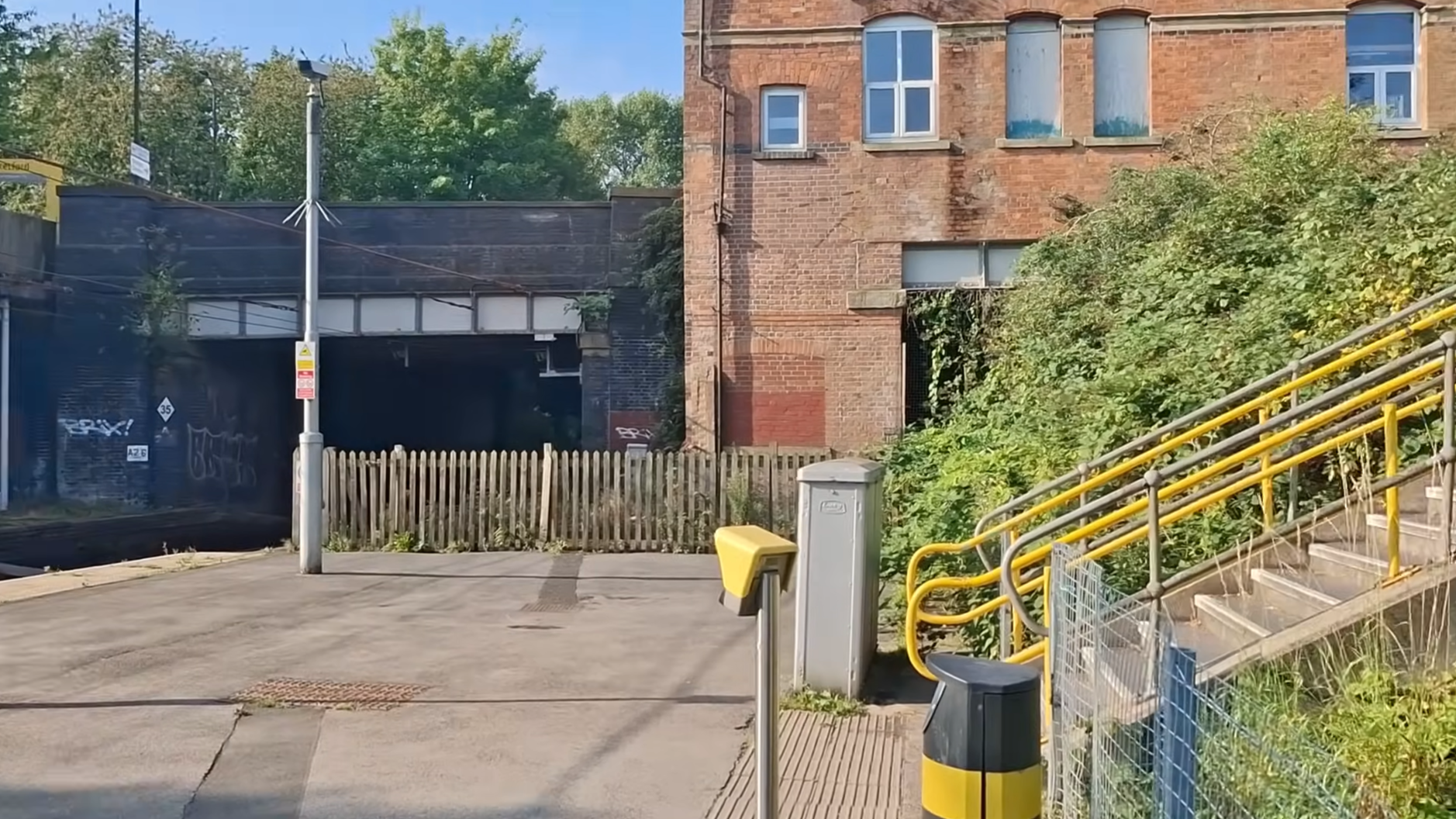
Looking south from “Platform 2”, viewing the Metrolink space under Edge Lane (left) and the space under the station building (right) where the extra two tracks passed under between 1904-1963.
…the space underneath the station building must have been where the third and fourth tracks were, therefore there must have been a platform there (where I’m standing in the picture) from 1904 at the latest when the tracks were added (though like I mentioned before, Stretford’s platform could have been built like this in the first place for some reason).
