
Secrets at Bury tram stop
From this video: Secrets at Bury tram stop - Metrolink Insights
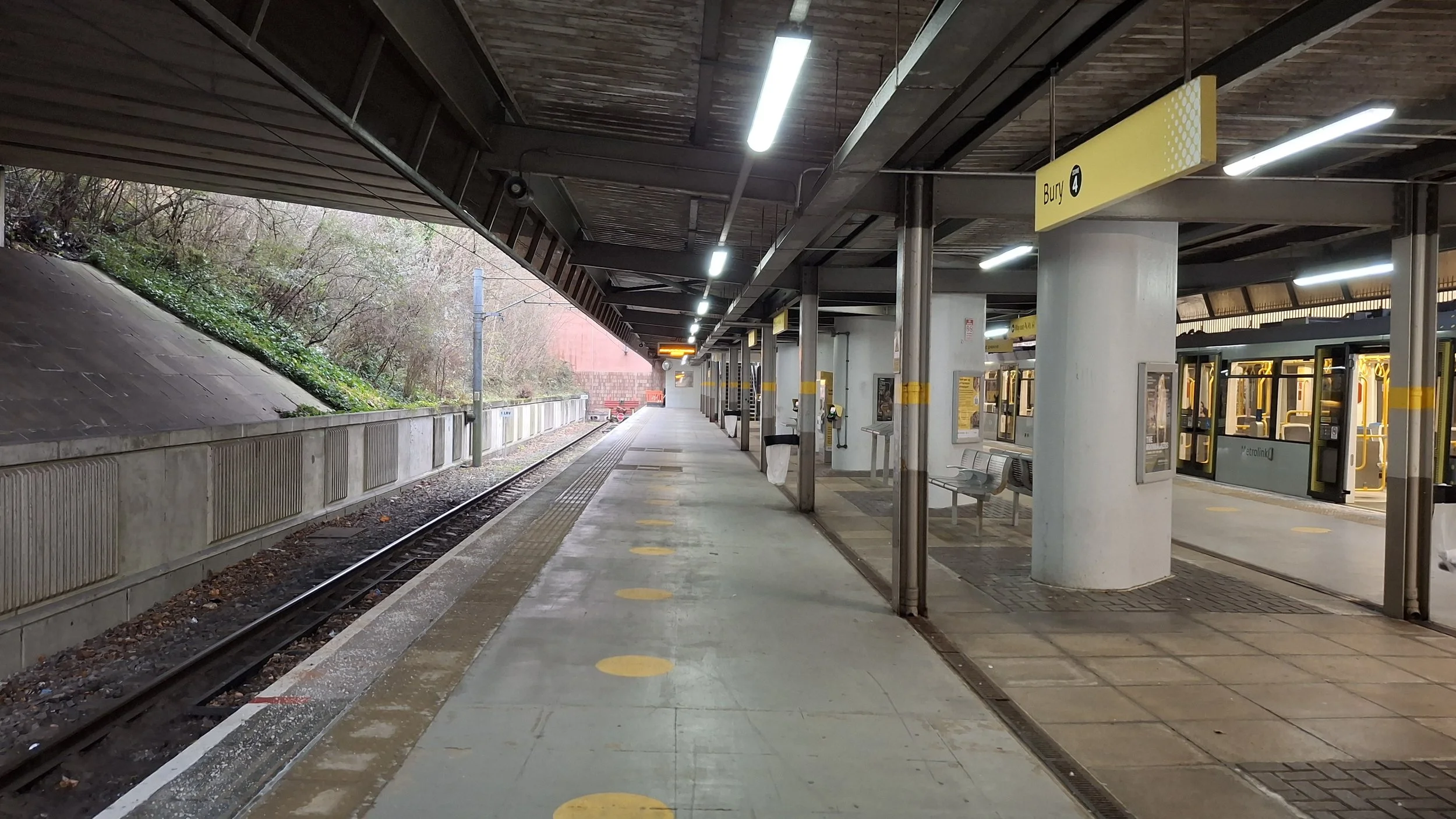
Bury tram stop Platform B facing south.
Bury tram stop is right at the end of the Bury Line in fare zone 4. It was built as a railway station named “Bury (Interchange)” and opened in 1980. It closed in 1991 for conversion to Metrolink, then reopened as a tram stop in 1992. It has served as a Metrolink tram stop for longer than its original purpose for trains!
The original station for Bury town was Bury Bolton Street, opened 1846, and it wasn’t a terminus: the line continued to Rawtenstall then to Bacup in the north, but over the years, the lines were cut back, and eventually only Manchester-Bury was left. Bury Bolton Street closed in 1980 and the terminus was moved closer to the town centre, linking up with a new transport interchange. Trains began running to “Bury Interchange” in 1980, but almost right after the station opened, plans for light-rail were beginning to rise in Greater Manchester, with the Bury Line being considered for this new mode of transport since it was a local railway line. So “Bury Interchange” station closed after the last trains on 16 August 1991 and reopened to Metrolink as “Bury” on 6 April 1992. It was the very first Metrolink line to open, the oldest one in operation today.
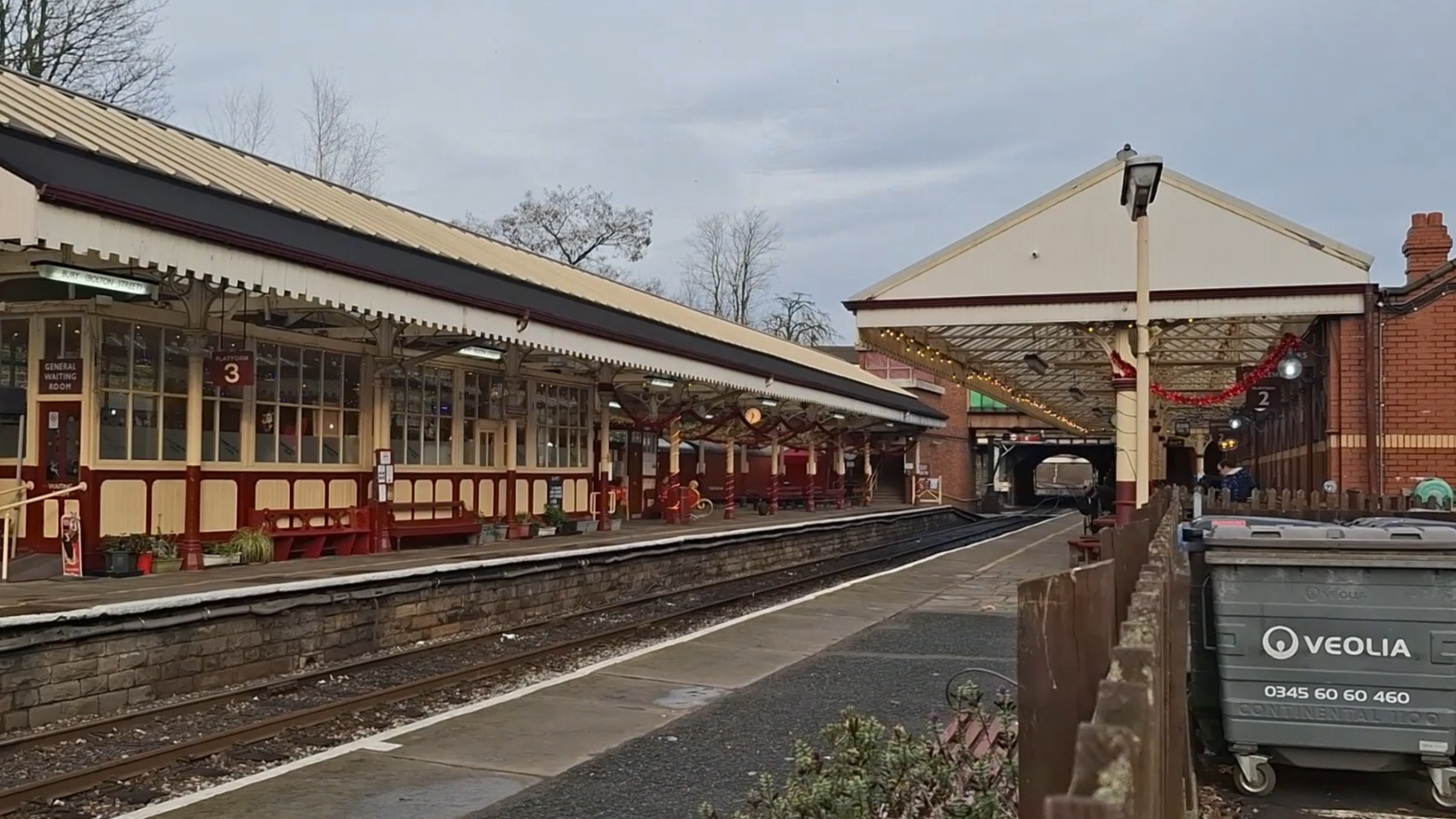
Bury Bolton Street heritage station looking north.
Bury Bolton Street was re-opened as a heritage railway station in 1987, along with a few closed branches to Rawtenstall and Heywood.
The tracks for the Bury-Heywood-Castleton line used to intersect directly with the Bury Interchange tracks at a flat crossing (uncommon!) but this layout didn’t last very long. Trains stopped running on the tracks in 1981 (passenger trains in 1980) and the tracks were lifted in 1983. When the heritage railway came along, the line from Bury-Heywood-Castleton was to be reopened at some point, so instead of the flat crossing layout (which is problematic for a number of reasons to do with the light-rail and heavy-rail tracks plus signalling), a bridge was built during Metrolink conversion over the tram lines to the south of the crossovers at Bury. The bridge only started carrying heritage trains in 2003, though, about a decade afterward.
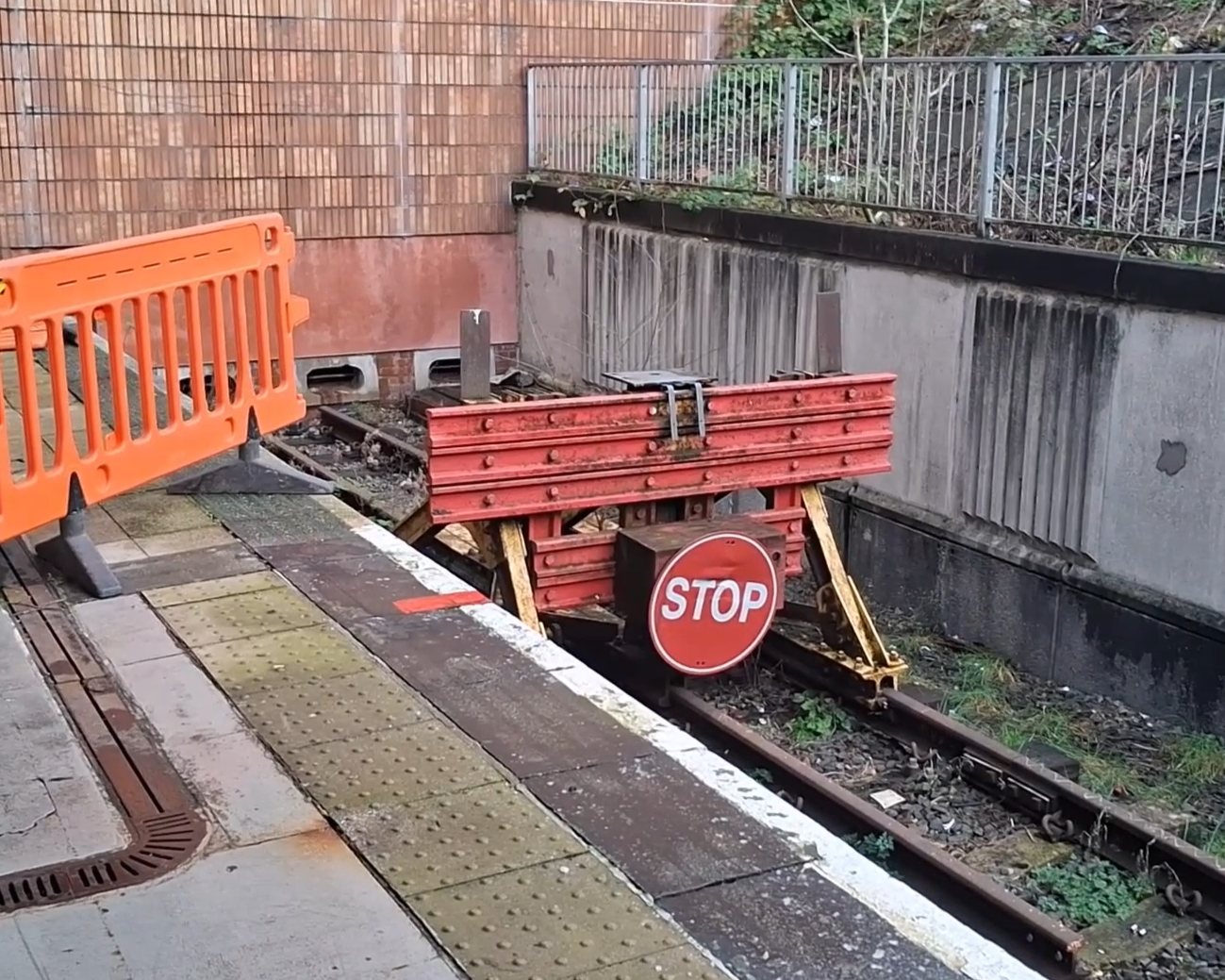
Buffers at Platform B.
The British Rail buffers were kept for the Metrolink, of course. The lights were taken off at some point (probably during Metrolink conversion).
There is a third rail visible in the shot, but this is not a remnant of the third rail system in use on the Bury Line between 1916-1991. The third rail was to the side of the tracks. This extra one in the picture is probably to keep the buffers in place?
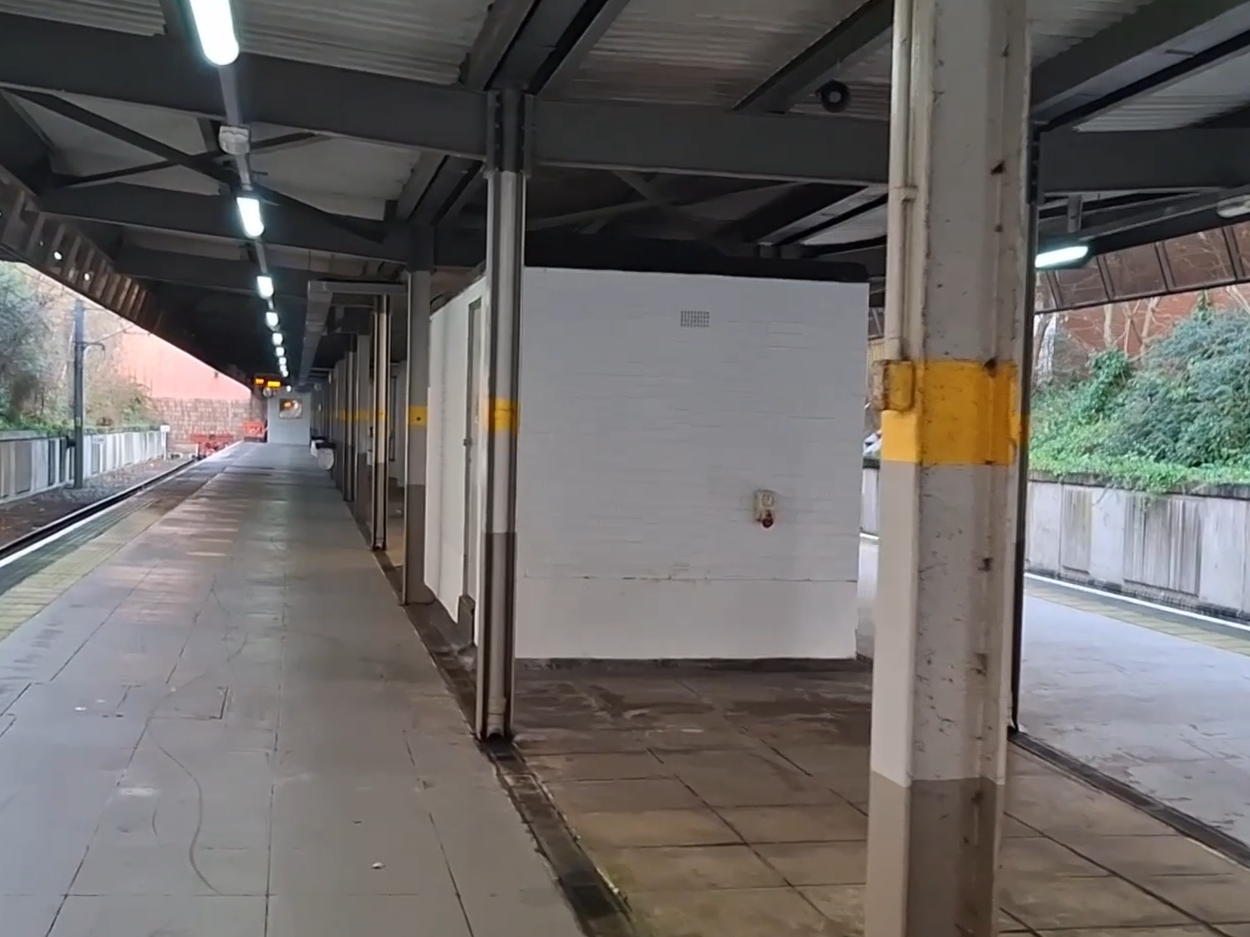
Brick building in the centre of the platforms.
This brick structure (or at least the area it takes up) used to hold a waiting room for the railway station back in British Rail days. During the Metrolink days it is a room behind closed doors warning of high-voltage electrics.
Metrolink platforms today are only required to be 54 metres long for a double tram, the longest vehicle that is currently allowed to operate. The other stops along the Bury Line just kept about that much of the platforms, around 60 metres and left the rest abandoned. It’s quite cool seeing the abandoned platforms, but you don’t get it here at Bury: the platforms are actually double length at 120 metres, able to stable two double trams on each platform.
The Bury Line stops didn’t have fences blocking off the abandoned platforms until the early 2010s. For Bury, it’s kind of complicated. Only about 90 metres of Bury’s platforms were refurbished for the Metrolink until around 2016 when the final 30 metres and a bit was refurbished. The entire platform was still able to be used to hold two double trams whenever necessary from when the tram stop opened in 1992, but the final 30 metres of the platforms were not actually refurbished for the Metrolink until ~2016.
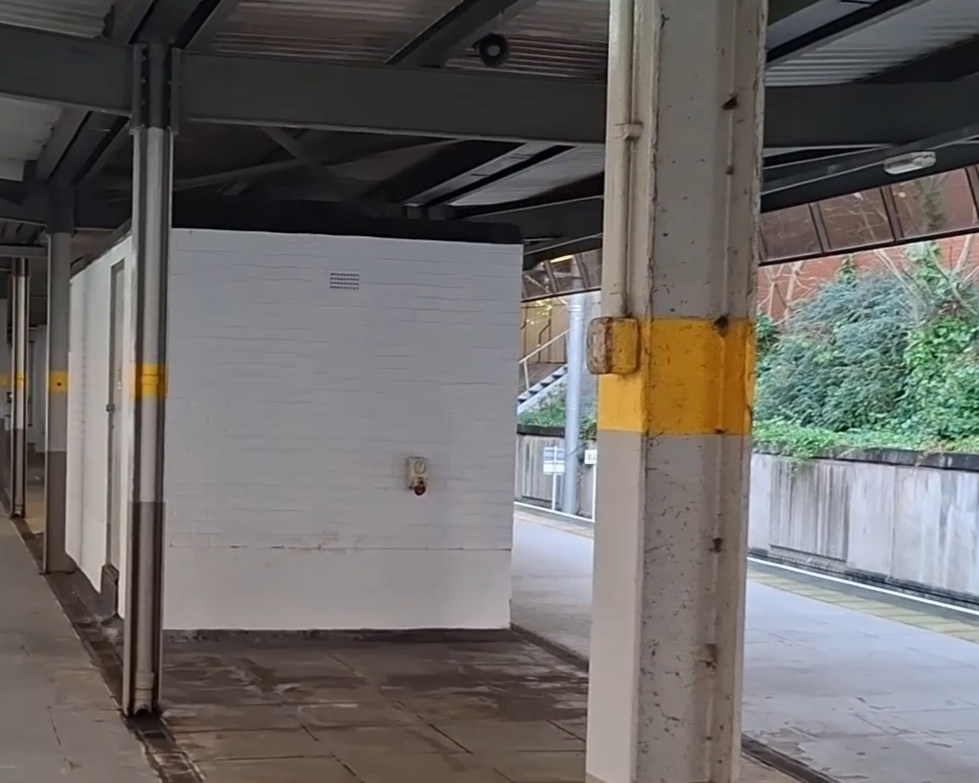
The beams holding up the canopy, painted grey with a yellow strip (Metrolink current branding colours).
The poles holding up the canopy over the entire station’s platforms were repainted from their original red to the current grey and yellow for the Metrolink’s rebranding which started in 2008. The poles were repainted at most three years after the rebrand began (sometime between 2008-2011).
The poles were only repainted on the 90 metres of platform that was converted for the Metrolink. The rest were repainted around 2016 when the Metrolink refurbished the remaining platform as mentioned before. Red was also not the original branding colour for the Metrolink: it was turquoise, but the Metrolink didn’t make their branding obvious by infrastructure until the rebrand in 2008.
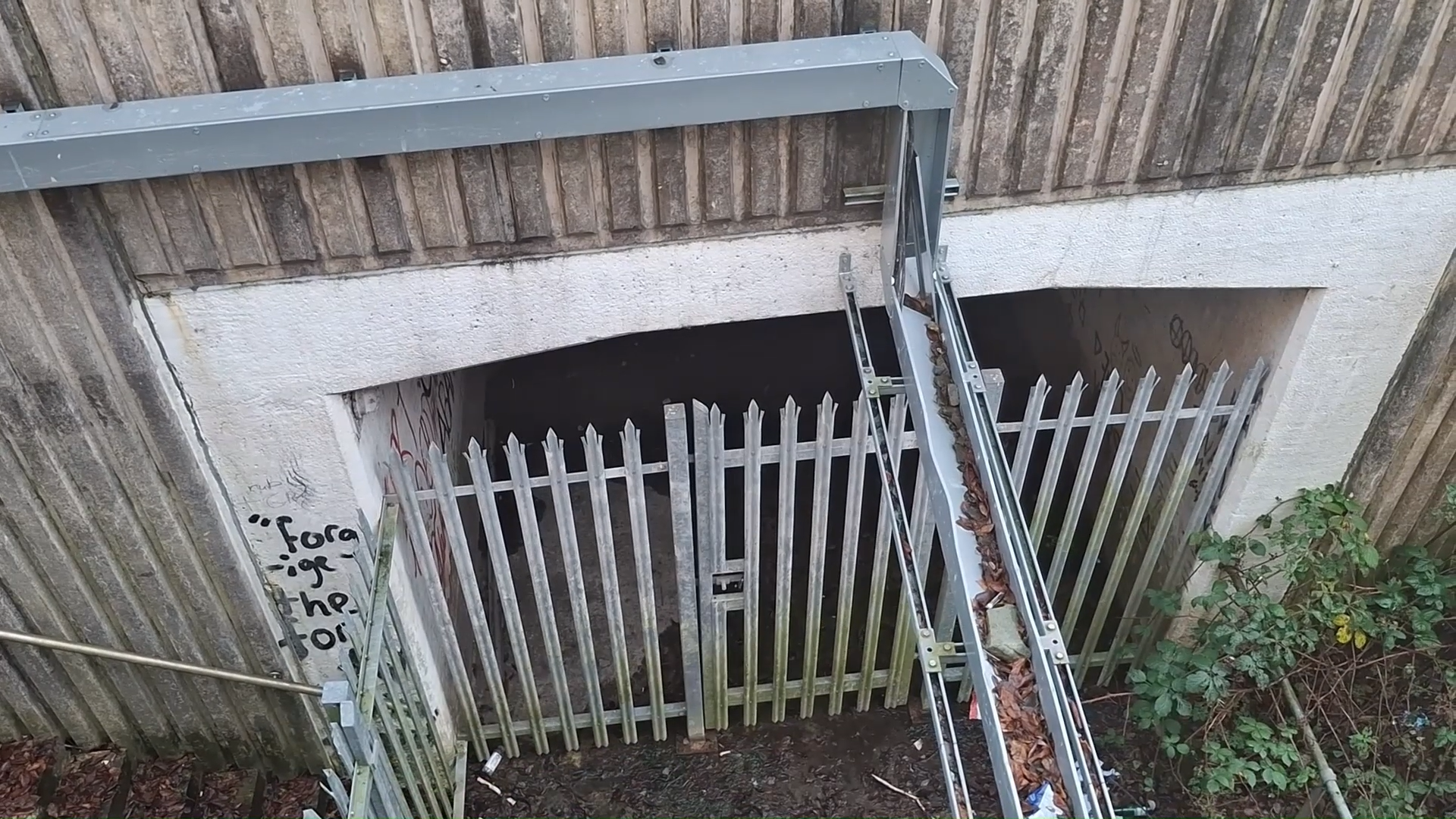
The underpass running underneath where the crossovers south of Bury tram stop are.
Underneath the crossovers on the approach to Bury tram stop is an underpass that was closed around 2011.
After that time it was gated off and a board placed vertically on the staircase down to the underpass (the stairs had probably been installed recently actually, they looked quite new) so that nobody could even get down to the gate at the actual subway entrance.
The now closed subway tunnel crosses underneath the tram lines to an area soon to be redeveloped into Pyramid Park, and a new footbridge over the tram lines here is due to be constructed soon and the underpass filled in. This footbridge would also provide an entrance to Bury tram stop from the south.
